People who say “Hollywood has run out of ideas” aren’t being very original

Screen Shot 2012-11-30 at 12.12.03 PM
Just a typical day in the comment section of almost any film-centric website…

I always cringe a little when I hear people say anything to effect of “Hollywood has run out of ideas” or “there’s no originality in Hollywood anymore.”  Not just because they’re lazy criticisms typically uttered with disdain, detachment, and smugness (and by someone who acts like they’re the first person to say it), but because it’s not even true.  The film industry has never been about original ideas, and that’s not necessarily a bad thing.

The main formula of “Hollywood” has always been 4 parts something familiar plus 1 part something different (to give you a reason to pay for it again).  That’s the way it’s been for over a century.

Case in point:  1939

When I first started writing this blog post, I wanted to examine “the greatest year in the history of American cinema.”  Two years kept coming up over and over again in my searches.  The first is 1939, because a startling number of films produced that year have truly stood the test of time.  Here are the ten movies nominated for Best Picture at the Academy Awards that year:  Gone with the Wind – Stagecoach – Wuthering Heights – Dark Victory – Love Affair – Goodbye, Mr. Chips – Ninotchka – Mr. Smith Goes to Washington – Of Mice and Men – and The Wizard of Oz.

Though Dark Victory (with Bette Davis, Bogart, and Reagan) and Ninotchka (a Lubitsch/Billy Wilder collaboration) have failed to leave an indilible mark on the cinematic consciousness of America, the others easily rank amongst all-time classics — movies that are constantly referenced as high points of their genre.

Now, you might say: “Exactly, Hollywood has tried to imitate those eight other films to death!  So I’m right. Hollywood is unoriginal.”

Except, of course, for the fact there’s a stunning dearth of “originality” on that list.

1. Gone with the Wind – based on a novel.

2. Stagecoach – Both a genre film and an adaptation of a short story “The Stage to Lordsburg”

3. Wuthering Heights – Novel.

4. Dark Victory – Based on a play.

5.  Love Affair – Look, an original story for the screen!

6. Goodbye, Mr. Chips – Novel (though it should be noted this movie wasn’t made by “Hollywood” — it’s British)

7. Ninotchka – An original screen story.

8.  Mr. Smith Goes to Washington – Based on an unpublished story.

9. Of Mice and Men – Novel.

10. The Wizard of Oz – Novel.

So of the best picture nominees from one of the most historical years in movies, 8 were adaptions of preexisting material.  But you know what?  I’ll knock it down to 7,  since the original story for Mr. Smith was never published.  So there you go.  7 out of 10, and no one has ever called Gone With The Wind or The Wizard of Oz unnecessary adaptations.  And as for Love Affair… It may be a classic, and it may be original, but you know what’s considered even more of a classic?  The 1957 remake:  An Affair to Remember.

Also noteworthy about Love Affair, its success led to two more films starring the same leads (Irene Dunne and Charles Boyer) being produced soon thereafter.  Hollywood did that a lot in the pre-home video era.  To satisfy the audience’s desire to see certain actors together again, when they couldn’t make a sequel they’d just pair them up again and again in other (very similar) films.  In other words, the golden age of movies was filled with a lot more You’ve Got Mail’s than Sleepless in Seattle‘s.

If Hollywood had as much of a habit of doing that today as they did back then, what would the internet call them?  Faux-quels?

Continue reading “People who say “Hollywood has run out of ideas” aren’t being very original”
A Conversation Between Anne Frank and St. Peter Thanks To A Couple Mitt Romney Supporters

A lot has been said about the controversial Mormon practice of baptizing holocaust victims after they’ve died, so I won’t say anything more on the matter. I’m just going to print this “conversation” that came to me in a dream; a conversation that I think sums up the feelings of those who support the practice (and allowed me to see this issue in a much better light):

Continue reading “A Conversation Between Anne Frank and St. Peter Thanks To A Couple Mitt Romney Supporters”

So you want to be a podcaster…

I don’t have a podcast.  I’ve only been a guest on one a couple times.  But I listen to a lot of them, and if I have one piece of advice for would-be podcasters it’s that…

Listener fatigue is real.  You really can have “too much of a good thing.”

I know what you’re thinking:  “But Eric, podcasting is cheap and there’s no restriction on length or posting frequency, so I’ll just put as much out there as possible and let my listeners pick what they want to listen to!”

First off, if that’s what you’re saying… you’re a liar.  Every podcast of yours that isn’t getting downloaded will send you into a tizzy.  If you don’t believe me… well, just ask anyone who’s been podcasting for a while.

Continue reading “So you want to be a podcaster…”

How does a techie/filmmaker/magician pop the big question?

How do you surprise someone who wants to be surprised?   That’s the problem I faced proposing to my girlfriend.  If I did anything out of the ordinary, she’d be suspicious.

I knew I wanted to do it around New Year’s — which would give us enough time to have a summer wedding — but as that day grew closer, I still found myself without any good ideas.  Should I use some of my old childhood magic skills to make the ring “appear” somewhere unexpected?  Should I use some tricks I learned in film school to do it with a heartfelt video?  At the time, I was just getting into the tech consulting biz.  Should I do something high tech?

Three days before my target date (Saturday, Jan. 1st), we went out for sushi.   My eyes kept wandering onto a TV in a corner of the restaurant.  And it hit me.  I pictured us sitting down to watch a Netflix movie at home.  Mid-way through the flick, a character would get down on one knee to propose to another, and that’s when I’d get up, walk to the TV, reach into the film, and pull the ring out of the movie world and into ours.  And then I’d propose with THE RING THAT WAS JUST IN THE MOVIE.   No way she’d see that coming.

I had no idea how I’d do it exactly, but I knew it’d require a little bit of magic, a little bit of filmmaking, and a little bit of techie know-how.  As soon as I got home, I started working on the following plan:

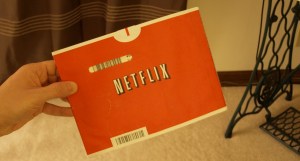
On Saturday, when I’m at her place, we’d get a disc in the mail from Netflix.  But what disc?  It’d have to be both a movie that’d realistically be on our Netflix cue, but also something with a half-decent proposal scene.  I rented a bunch of DVDs, scanned through a bunch of movies, and settled on…


Leap Year
, starring Amy Adams.  It was a romantic comedy that came out within the last year that neither of us saw in theaters, so it could realistically be on our Netflix cue.  It had a proposal-like scene in the 1st ten minutes.  Perfect.  I’m not going to wait two hours to do this thing.  Also, Melissa always falls asleep twenty minutes into every movie we sit down to watch together.  I mean always.  I had to beat the clock.

I’d rip open the envelope, pop the disc into the DVD player, and we’d sit back to watch the movie.  Ten minutes later, Amy Adams and Adam Scott would be on the TV, dining at a super-fancy restaurant, where Amy thinks Adam is going to propose to her (Spoiler Alert:  He’s not, but Melissa doesn’t know that).  So basically, their situation is the exact opposite of ours in every way.
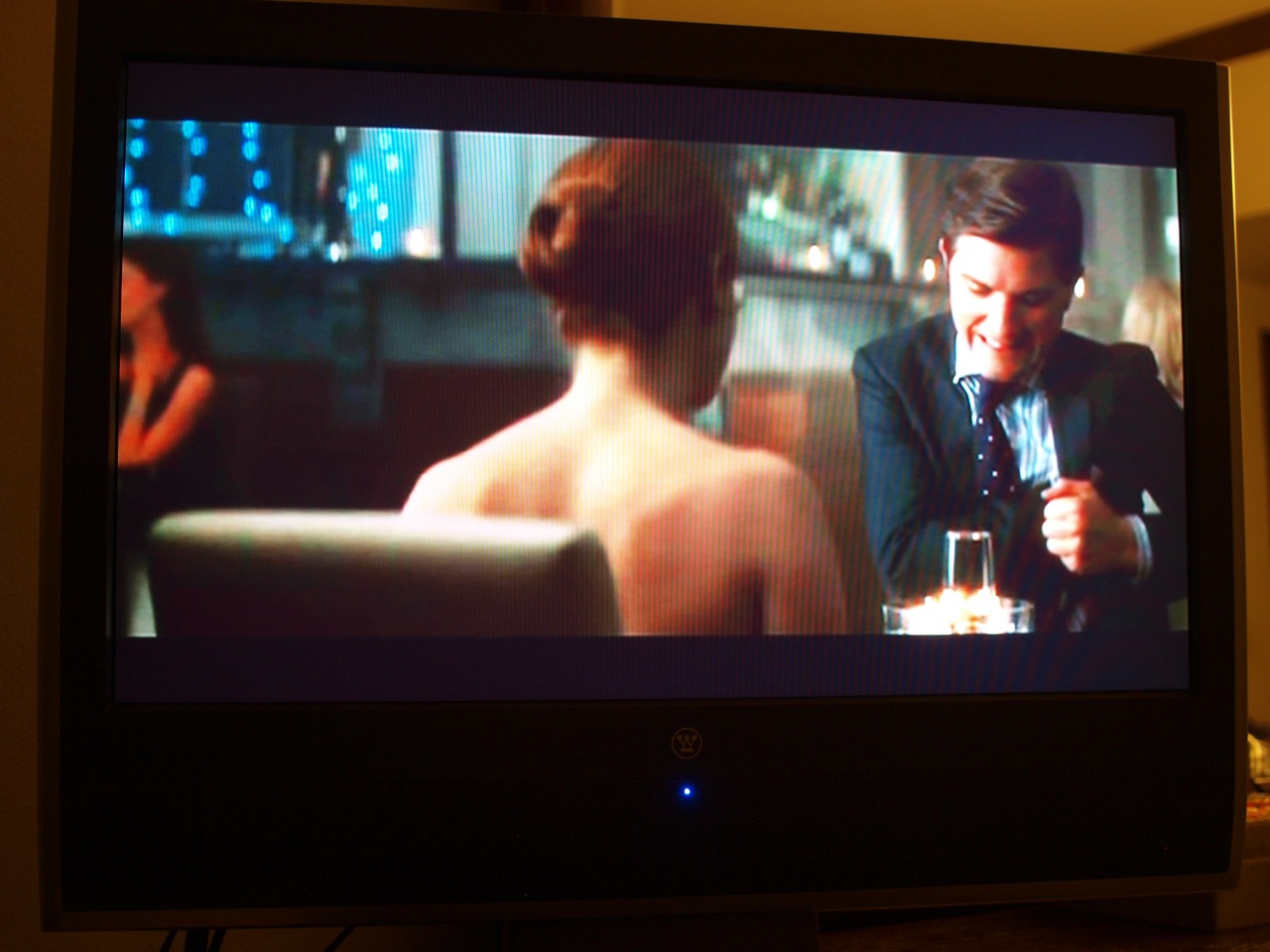
Adam reaches into his pocket, pulls out a small jewelry box, and places it on the table.

Amy looks down at the box and lights up.  This is the moment her character has been waiting for her entire life.

And it’s at that exact moment the DVD will start to get glitchy…

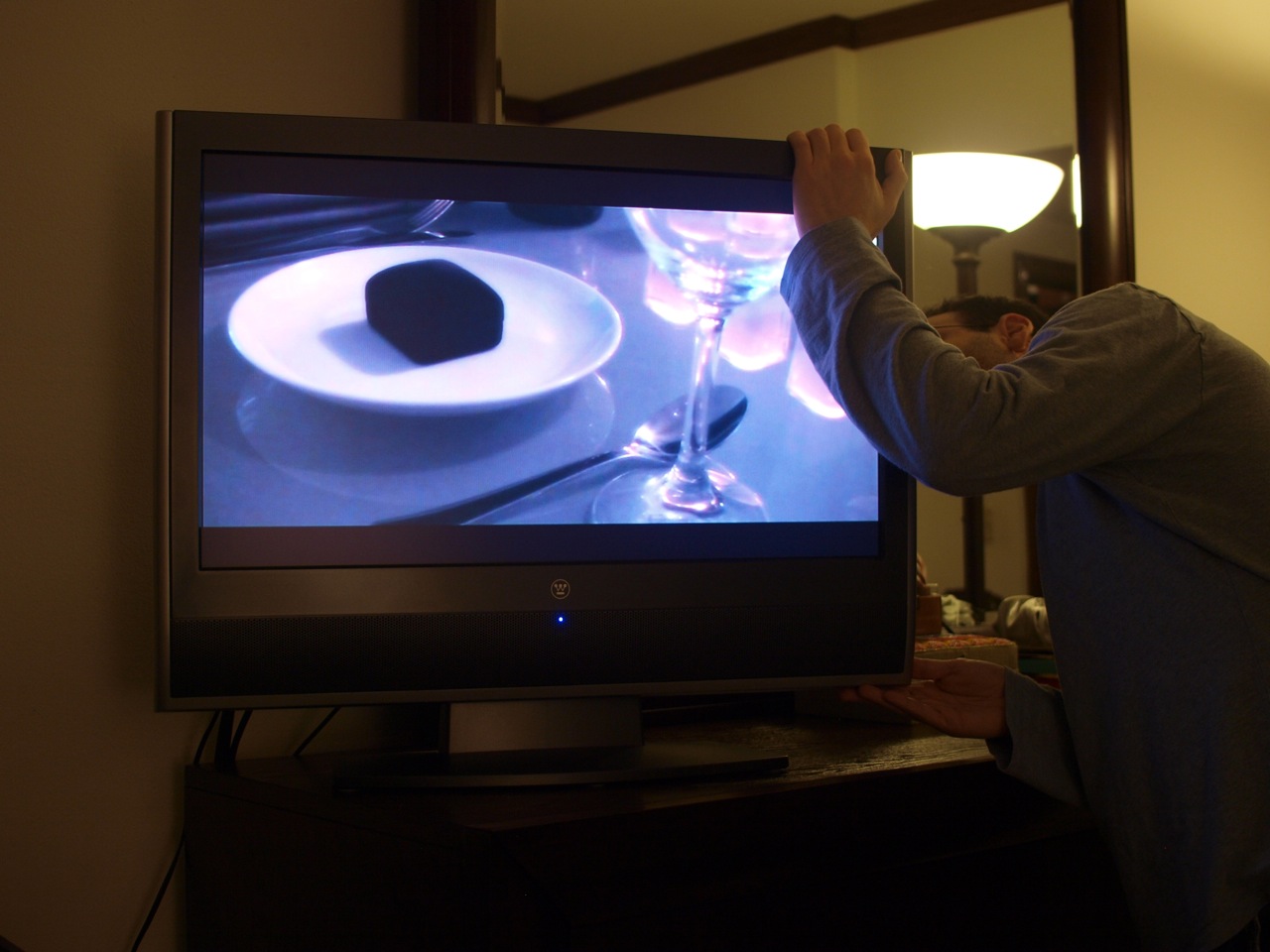
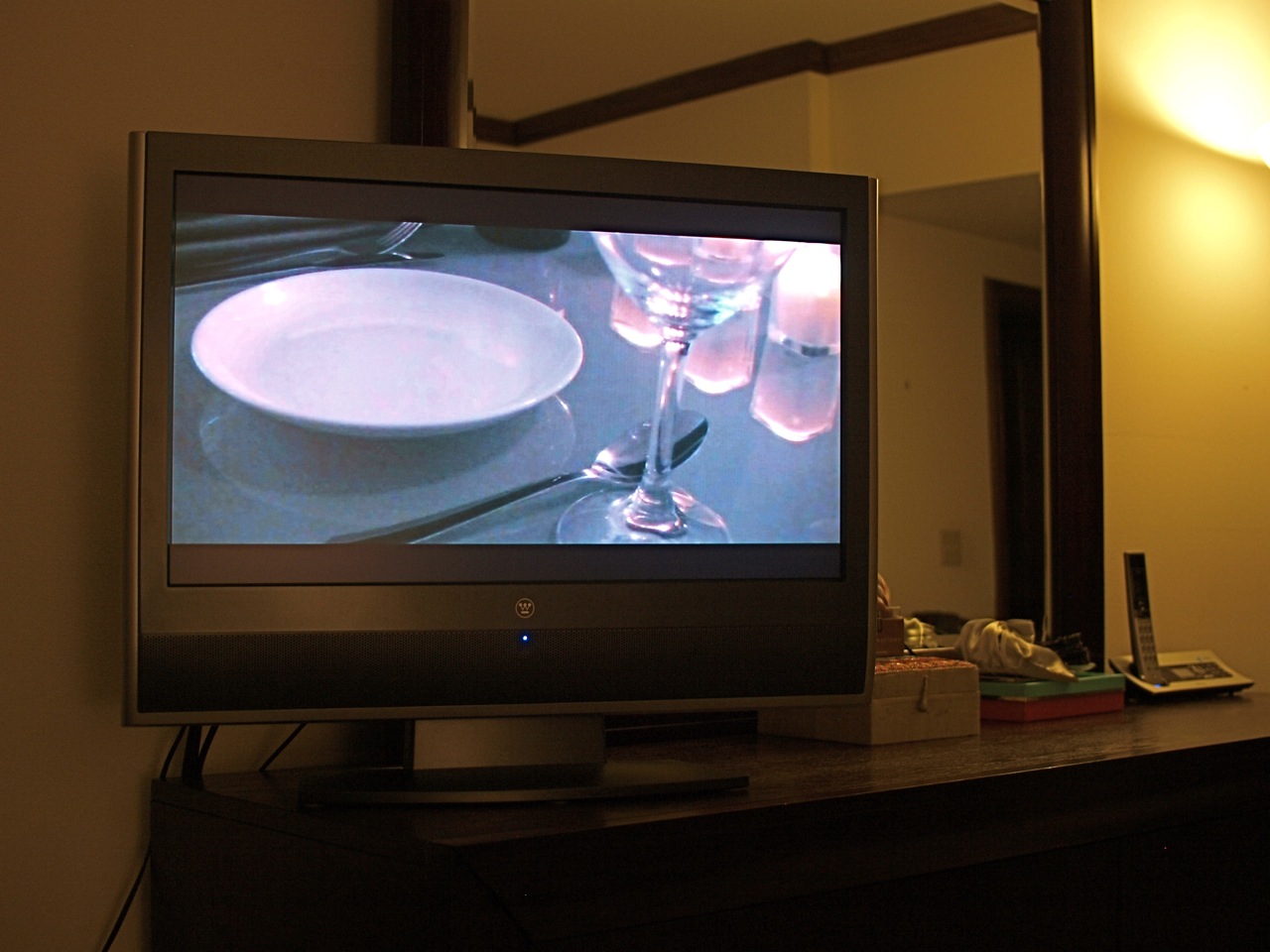
After a moment of skipping, the DVD will freeze on the image of a jewelry box on a restaurant table.

Melissa will think the DVD is scratched.  I’d say “let me take a look at it.”

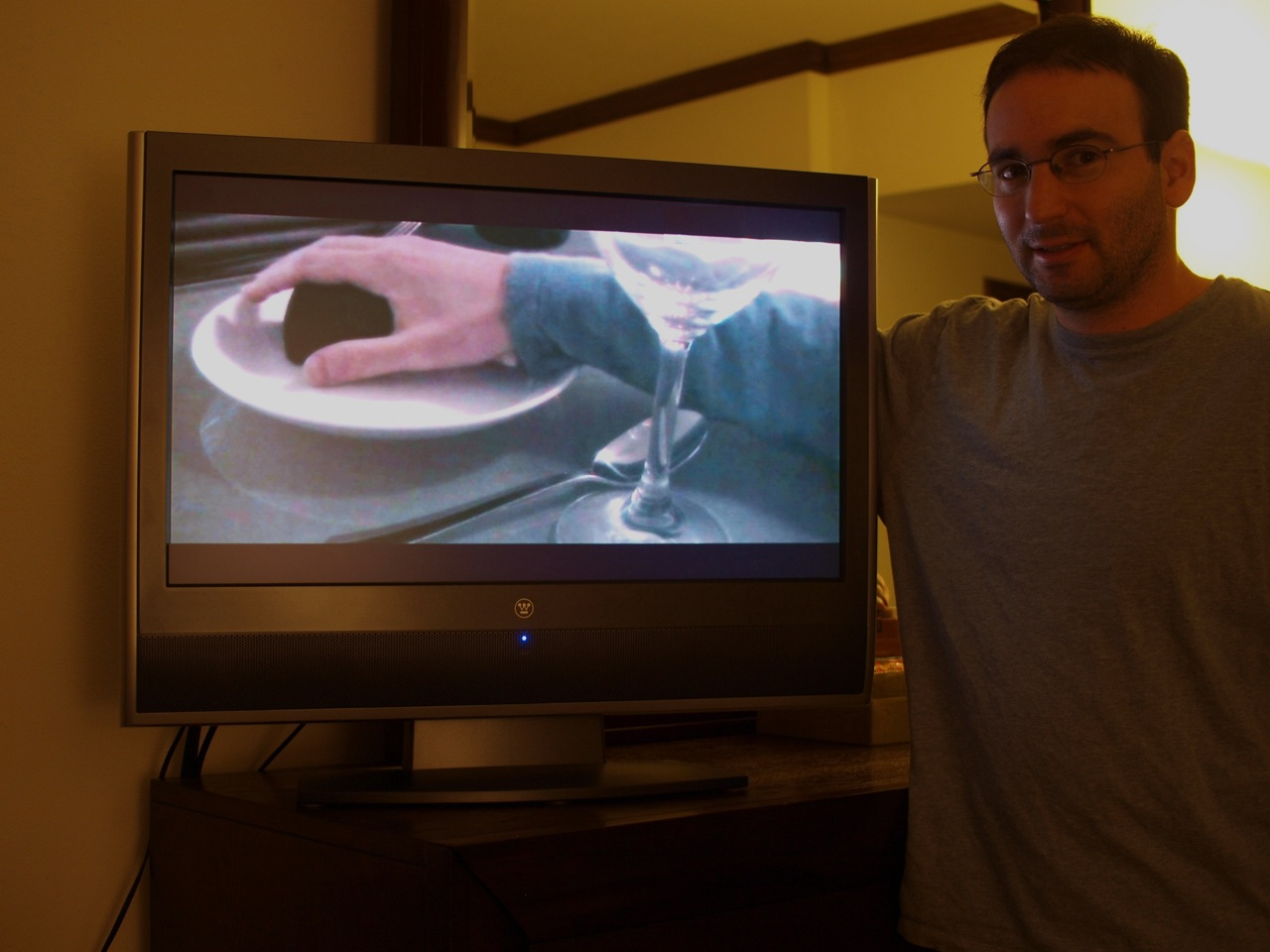
Then, as I reached behind the TV to “fix” it, Melissa will see…

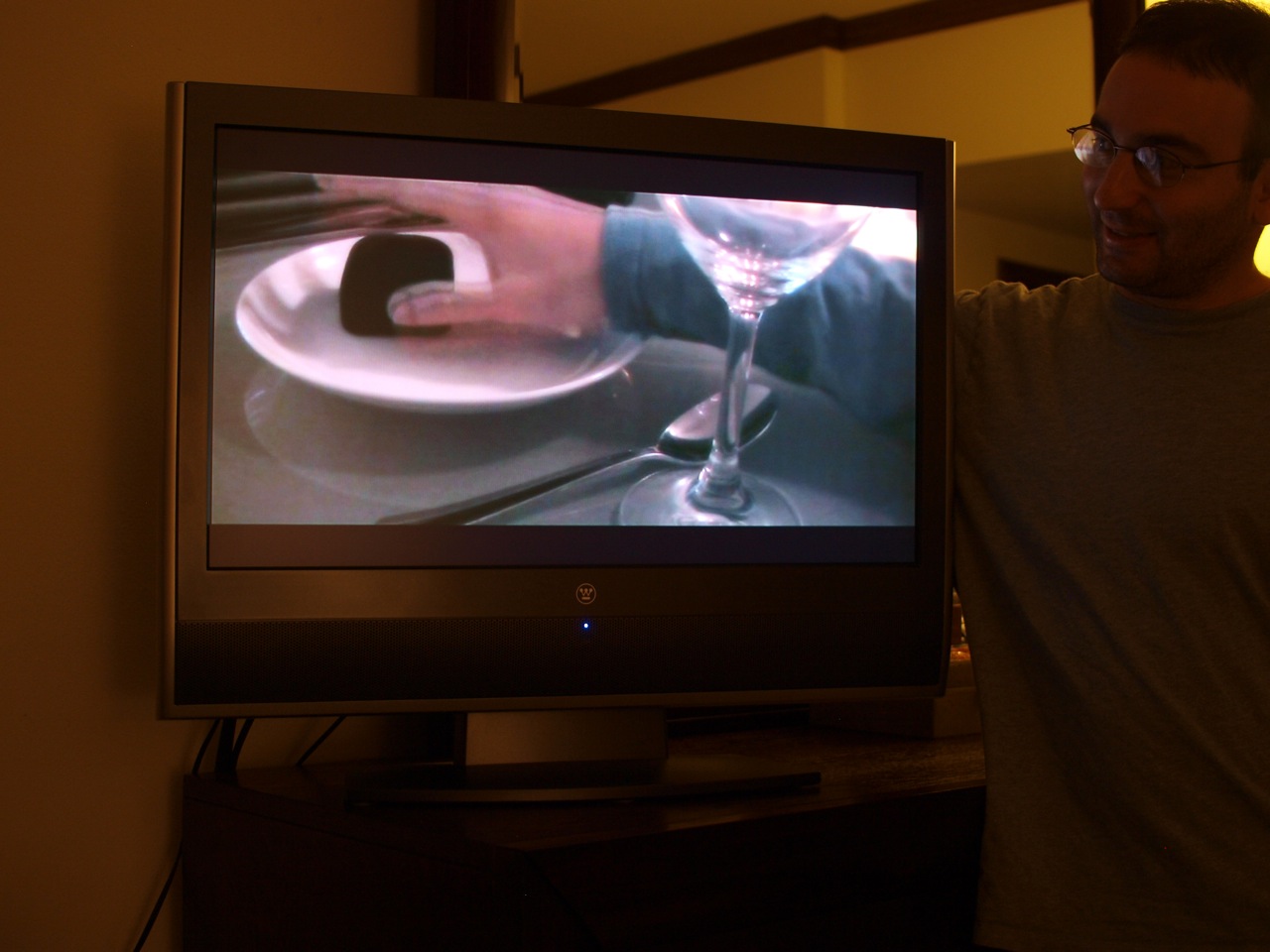
…my hand and arm, reaching into the movie, grabbing the jewelry box, and pulling it out into the real world.

“I found the problem,” I’d tell her.  “This isn’t for Amy Adams.  It’s for you.”

At least that was the plan.  And for the most part, that’s how it went down.  Read on to find out how I did it, what went right, and what went wrong…

Continue reading “How does a techie/filmmaker/magician pop the big question?”

Why didn’t Mark Zuckerberg sue the makers of the Social Network?

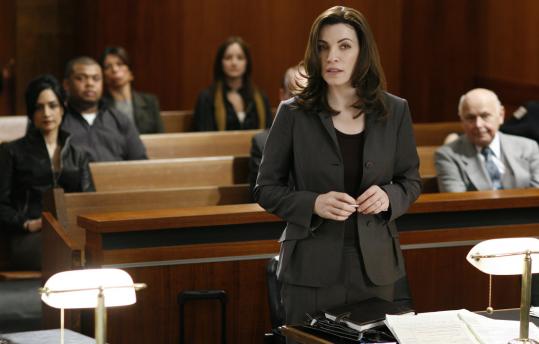
The Good Wife answered that question on Tuesday:  “Because such lawsuits are simply bound to fail thanks to a little something called the first amendment.”  But the episode went a step further: it showed what might happen if Zuckerberg did sue, and it even explored an area where he might actually have a winnable case.  The show’s handling of the subject was quite interesting, if not totally surprising:  The Good Wife has a history of wringing a surprising amount of drama out of routine legal procedures… you know, kinda like a certain best picture nominee.

Your Unspoken Miranda Rights

Anyone who’s ever seen the first five minutes of any TV cop show knows you have the right to remain silent, right to an attorney, etc.  But those aren’t your only rights.  Here are the ones “the man” doesn’t want you to know about…

  • You have the right to unfollow your arresting officer on Twitter.
  • You have the right to talk like a pirate, even when it’s not talk like a pirate day.
  • You have the right to repeatedly remind your publicly assigned defense attorney that you probably make more money than he does.
  • If arrested for public intoxication, you have the right to use your one phone call to drunk dial an ex-girlfriend.
  • You have the right to take your own life and save the public the expense of your trial.  Especially if you’re innocent, because putting an innocent person in prison is much more expensive than a guilty one.
  • You have the right to impress the judge with your dead-on impersonation of Sandra Day O’Connor.
  • If arrested by your cop roommate, you have the right to invoke the third amendment and demand that he move out.
  • Thanks to legal pioneers Adam Horovitz, Michael Diamond, and Adam Yauch, you have the constitutional right to party.
  • You have the right to ask for a copy of your mug shot and use it on your JDate page.

And most your most important right of all…

  • If there’s a COPS crew filming your arrest, you have the right to refuse to sign the release form allowing them to show your face on TV. (Seriously, why does anyone sign those things?)

10 Biggest Inaccuracies In The Aborted Kennedy Miniseries


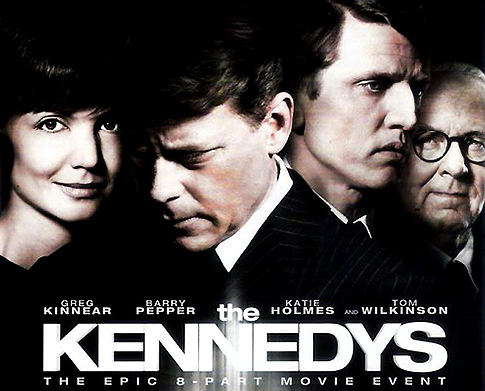
It’s been a couple weeks since the History Channel abruptly decided to shelve its Kennedy miniseries starring Greg Kinnear and Katie Holmes and still no other network has stepped in to pick it up.   Some believe the project was doomed by conservative bias while others cite too much dramatic license.  Here’s some of the most egregious errors:

1.  Kinnear insisted he could stay in character as JFK better if everyone called him “Greg” when the cameras were rolling.

2.  It turns out that Jackie Kennedy did NOT carry around a copy of Dianetics everywhere she went.

3.  There’s no way White House televisions in 1960 could’ve had access to the Fox News Channel.

4.  According to one historian, a sex scene lacked credibility not because there’s zero proof it happened, but because he could “totally see” Kinnear’s “cock sock.”

5.  The entire Kennedy administration wasn’t the dream of an autistic child.

6.  Probably not a good idea casting the guy who’s not good enough for Meg Ryan in “You’ve Got Mail” as one of history’s most desirable men.

7. RFK didn’t get the nickname “Bobby” because he had no arms or legs.

8.  Though it made for a more frightful climax, Lee Harvey Oswald and JFK were not roommates who met on Craigslist.

9. JFK’s actual inauguration speech spent far less time railing against Obamacare.

And the miniseries’s biggest factual fallacy…

10. Though filming the entire series in real time à la 24 was an interesting creative choice, it probably wasn’t a good idea to choose 8 hours where the Kennedy’s mostly slept.

Is à la carte cable really the answer?

There’s a growing demand for “à la carte” cable pricing — i.e. the ability to pick and choose just the individual channels you want.

After all, why pay for stuff you aren’t using?  You don’t want the electric company forcing you to keep your lights on when you’re not home.  Paying only for the TV that you plan to consume makes sense.  More choice and lower bills?  Sign me up!  Right?

Wouldn’t it be nice to order cable like we order dim sum?

There’s just one problem with that line of thinking.   There isn’t a direct correlation between the bulk of your cable bill and the number of channels your receive.  Choice is definitely good, but we could wind up paying more for less.  A lot less.

Continue reading “Is à la carte cable really the answer?”

Why is Sprint still airing their “first” Evo commercial?

I saw this commercial again just last night.  I get that when the HTC Evo came out in June, Sprint wanted to really play up its “first” status among 4G cell phones, which was a great idea back when it was the only 4G phone.  But all Sprint’s doing now is reminding people the Evo is the oldest 4G phone out there.  Not sure that’s the message they want to be sending.

Side note: Does anyone even remember what the first 3G or 2G phones were? Nope. I don’t, and I actually pay attention to these things. The commercial pretends like being the first 4G phone is as iconic and groundbreaking as being the first rotary phone or the first rocket into space, but as far as I can tell, only three cell phones have officially reached icon status:  the first iPhone, the Motorola Razr, and Zack Morris’s grey brick mobile phone.  That’s it.

Though it helped make Zack popular at school, it also lead to his fatal brain tumor.

Sony’s Google TV remote is a handful. Literally. And not in a good way.

Sony's Google remote has way too many buttons

I tried out Sony’s Google TV solution at a Sony store today.  No, make that:  I tried to try out Sony’s Google TV solution.   I wanted to write a quick post today about my first thoughts on it, but I can’t, because I spent more time trying to figure out the darned remote than I did actually using it.

The remote is a perfect example of “too much of a good thing.” 90% of the buttons are only needed very occasionally, which means for most basic tasks (like, say, watching TV) it’s just a lot of wasted and confusing space.  And when you do need to use one of the extra buttons, it’s not-at-all obvious which button is the right one to press.  I had to **gasp** ask a sales guy for help with something as simple as moving the cursor when using the Google TV web browser (the answer: the large round button on the upper right doubles as a mini touch-pad — cool, but not the least bit intuitive).

I still want to try Google TV at home at some point, but based on my five minutes with Sony’s solution, I’m now leaning towards giving Logitech’s Google TV box a try.  Its remote interface has to be better, right?